These are just some things I wrote many years ago (as a lay person) for my husband when he was going to family court to fight for visitation for his son (my step son).
Supplemental Declaration
Supplemental Declaration








If you are a witness or defendant, rule of thumb, pastel colors and make yourself look as young as possible.
For adults:


The Lindsay Clancy case forces us to confront two painful truths at the same time: postpartum mental illness can be devastating, and three innocent children were deliberately killed by the person responsible for protecting them.
Cora was five. Dawson was three. Callan was only eight months old.
Their lives must not become a footnote in a national conversation focused almost entirely on their mother.
Clancy has never denied killing her children in their Duxbury, Massachusetts, home on January 24, 2023. The disputed question at trial was whether she was legally responsible for doing it. Her attorneys argued that postpartum psychosis left her unable to appreciate the wrongfulness of her actions or control her behavior. Prosecutors maintained that, although she was experiencing mental-health problems, she still understood right from wrong and acted deliberately.
After a five-week trial and seven days of deliberations, the jury could not reach a unanimous decision. The judge declared a mistrial on September 4, 2026. Clancy therefore has not been convicted or acquitted, and the charges remain unresolved. Prosecutors may still retry the case. Associated Press
Based on the evidence presented, I believe she should be found criminally responsible.
I do not doubt that Clancy was mentally ill. Her family described a frightening decline in her mental health. She sought professional help, received psychiatric treatment and was prescribed numerous medications. Experts disagreed about her condition, diagnosis and state of mind.
Those facts deserve compassion, and failures in maternal mental-health care deserve serious investigation.
But a diagnosis does not automatically erase criminal responsibility.
I don't think anyone doubts that Richard Chase was mentally ill either, but he still received the death penalty.
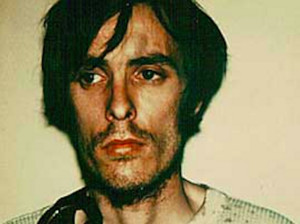
The legal question was not simply whether Clancy suffered from depression, anxiety, psychosis or the effects of medication. The question was whether her mental condition made her substantially incapable of understanding that killing her children was wrong or of controlling her conduct.
Even the prosecution acknowledged that Clancy was mentally ill. Its position was that mental illness alone did not prove that she met Massachusetts’ demanding standard for lack of criminal responsibility. PBS NewsHour
That distinction matters. If every serious mental-health condition automatically eliminated responsibility, the insanity defense would become far broader than the law intends.
Clancy’s actions were not limited to one sudden or reflexive movement. Three children were strangled with exercise bands. Each child had to be separately overpowered.
That is difficult for me to reconcile with the argument that she had no meaningful awareness or control.
According to the prosecution’s theory, Clancy created an opportunity to be alone with the children by sending her husband, Patrick, out of the house. After the children were attacked, she attempted to take her own life by jumping from an upstairs window.
The defense viewed the suicide attempt as evidence of a catastrophic psychotic break. I see another reasonable interpretation: she understood the horror and consequences of what she had done and did not want to face them.
A suicide attempt does not prove guilt by itself. In context, however, it can be considered alongside the timing, the method used, her behavior surrounding the killings and the expert testimony about whether she understood right from wrong.
The prosecution’s psychiatric expert concluded that Clancy was mentally ill but remained capable of understanding the wrongfulness of her conduct. The defense experts reached a different conclusion. Jurors were entitled to evaluate those competing opinions rather than treating the words “postpartum psychosis” as the end of the inquiry.

Much of the public discussion has centered on Clancy as a loving mother who became terribly sick. Her former husband offered powerful testimony about the woman she had been and the decline he witnessed. His forgiveness is deeply personal, and no outsider has the right to tell him how to grieve.
But forgiveness and legal accountability are different things.
A person can previously have been a devoted parent and later commit a horrifying crime. Someone can be profoundly ill and still retain enough understanding to be responsible for her choices. A defendant can deserve humane treatment without being declared legally innocent.
We should improve postpartum screening, listen when mothers say something is wrong and ensure that families can obtain emergency psychiatric care. None of that requires us to pretend Cora, Dawson and Callan simply died because “the system failed.”
They were killed.
After the mistrial, several jurors said the panel had leaned 11–1 toward finding Clancy not guilty by reason of insanity. They criticized the lone holdout and claimed he acknowledged reasonable doubt but refused to acquit. Those accounts are troubling if accurate, but they do not transform an unfinished deliberation into a lawful verdict. Reuters
A criminal verdict must be unanimous. There was no unanimous verdict here.
The holdout juror should not be celebrated merely for standing alone, but neither should public pressure substitute for the judicial process. The evidence should determine the result—not sympathy campaigns, online outrage or assumptions about what a mentally ill mother must have experienced.
The greatest danger in discussing this case is allowing the children to disappear behind debates about medicine, motherhood and criminal law.
Cora had a future.
Dawson had a future.
Callan had a future.

They were not symbols, medical complications or supporting characters in their mother’s tragedy. They were three human beings whose lives were taken.
I believe Lindsay Clancy was suffering. I believe the mental-health system may have failed her. I believe she should receive appropriate psychiatric treatment for the rest of her life if necessary.
I also believe she knew enough to be held criminally responsible.
Compassion does not require the abandonment of judgment. Mental illness may explain conduct without excusing it. Justice can recognize a defendant’s illness while still acknowledging the deliberate destruction of three innocent lives.
Lindsay Clancy deserves a fair trial, humane treatment and every protection the law provides.
Cora, Dawson and Callan deserve justice.
I am excited to announce that I am currently preparing a new contract law textbook for future publication:


Contract law is one of the foundational subjects studied by beginning law students, but it can also be one of the most intimidating. Traditional casebooks often introduce students to lengthy judicial opinions, unfamiliar terminology, and complicated rules before they have had an opportunity to understand the basic story behind each case.
I wanted to create something different.
Contract Law Comes to Life is designed to introduce contract law in a clear, organized, and memorable way. Instead of relying only on dense legal explanations, the textbook combines plain-English instruction with visual learning tools, graphic-novel case stories, memory tips, workbook exercises, and practice questions.
Presenting landmark cases in graphic-novel form allows students to see what happened before they are asked to identify and analyze the legal rule.
The goal is simple:
See the story. Understand the rule. Remember the law.
The textbook guides readers through the major questions involved in contract analysis:
Was a contract formed?
Is there a defense to enforcement?
Was the contract breached?
What remedy may be available?
Readers will learn about important subjects such as:
Offer and acceptance
Consideration
Mutual assent
Capacity and legality
Promissory estoppel
The Statute of Frauds
Contract defenses
Performance and breach
Damages and other remedies
Common law and UCC Article 2
This book is intended to be both a study guide and an active-learning workbook. Readers will encounter:
Graphic-novel versions of important cases
Plain-English legal explanations
Memory tricks and helpful acronyms
Case spotlights
Vocabulary reviews
Crosswords and other learning activities
Hypothetical fact patterns
Multiple-choice questions
Workbook exercises
Answer keys
Step-by-step legal analysis practice
These features are meant to help students interact with the material instead of simply reading and trying to memorize it.


Contract Law Comes to Life is being created especially for:
First-year law students
California Law Office Study Program apprentices
Students preparing for the First-Year Law Students’ Examination
Aspiring lawyers who want an early introduction to contract law
Teenagers considering a future legal career
Independent learners
Anyone who wants legal concepts explained in ordinary language
The book is not intended to replace a professor, supervising attorney, complete casebook, or professional bar-review program. Its purpose is to build a strong foundation so readers can approach more advanced legal materials with greater confidence.
I believe legal education should be challenging without being unnecessarily confusing.
Many capable students struggle with law because they are introduced to complex terminology before anyone gives them the big picture. Once students understand who the parties are, what happened between them, and why the disagreement reached a courtroom, the legal rule becomes much easier to understand.
This textbook was created to help make that connection.
My hope is that it will encourage legal apprentices, independent learners, and future law students who may not have access to a traditional law-school environment. Legal education should be more approachable for people who learn visually, need plain-English explanations, or simply want a more engaging way to study.
Contract Law Comes to Life is still being prepared for publication. I will share additional previews, sample pages, graphic-novel case studies, and publication information here as the project moves closer to completion.
If you are a law student, legal apprentice, aspiring attorney, educator, or someone who simply enjoys learning about the law, I invite you to follow this blog for future updates.
A textbook about contract law does not have to feel lifeless. When the cases become stories and the rules are explained clearly, the law truly begins to come to life.

Comments by Brian Shilhavy
Editor, Health Impact News
No matter what your opinions are of Alex Jones, yesterday’s jury verdict in Connecticut to pay $965 million in damages to Sandy Hook families and an FBI agent for calling the mass shooting a “hoax” a decade ago, should shock you in terms of the status of the First Amendment in the Bill of Rights of the Constitution of the United States that protects freedom of speech, and freedom of the press.
I have been a journalist in the Alternative Media for over a decade, and have faced numerous threats and accusations of defamation and other charges over the content of the articles we publish at Health Impact News, especially in our Medical Kidnapping category. It has forced me to retain some of the top 1st Amendment attorneys in the nation, so this is a topic I have quite a bit of experience in.
While the First Amendment protects freedom of speech for the Press, one cannot print (or broadcast) lies that cause harm to the entity being criticized.
Prior to this jury’s verdict yesterday, the largest defamation case in U.S. history was a case in 1997 where a federal jury in Houston awarded $222.7 million to a local bond brokerage firm in a libel suit over a 1993 article in The Wall Street Journal. (Source.)
The brokerage firm, MMAR Group Inc., contended in its suit that the article made false statements that drove away its clients, causing the firm to close within a month of the article’s appearance. The jury set $200 million in punitive damages and $22.7 million in compensation against Dow Jones & Company, the publisher of The Wall Street Journal. (Source.)
This jury verdict in Connecticut, therefore, is unprecedented in U.S. law, and exceeds the 1997 case against the Wall Street Journal by over $750 million. While the plaintiff in the WSJ case claims to have lost clients and their business, something that can be assessed a monetary value to, what exactly did the alleged victims in the Sandy Hook families lose, that warranted such an enormous amount of money?
Former White House Press Secretary Jen Psaki tweeted:
The damage Alex Jones has done to the lives of these families is horrific—nearly a billion dollars doesn’t solve their pain-but also true that the end of infowars would be a public service.
Really? The verdict was not even enough because of the “pain” of these families?
I have not followed this case, but what evidence of “pain” caused by Alex Jones was provided in discovery to justify such a large monetary award? And since Alex Jones was not the one who killed their family members, how did they distinguish this “pain” from the pain they suffered from seeing their family members murdered by Adam Lanza?
Jen Psaki has a history of trampling over the First Amendment.
In July of 2021, while still serving as the Press Secretary of President Biden, she admitted that the White House was telling Facebook to censor any information that they did not like about COVID-19, another clear violation of the First Amendment. (Source.)
Listen America, if we want to hold on and value our right to Freedom of Speech and Freedom of the Press, we MUST put aside partisan politics, and allow those we disagree with to voice their opinions, no matter how offensive we find it. Many men and women have died to protect these rights, and this is a non-partisan issue.
When Donald Trump was President, he too showed a callous disregard for the First Amendment, and even tried to get Congress to pass a law criminalizing anyone who dared to burn the American Flag, a form of Free Speech that the Supreme Court has actually already ruled on. See:
Trump also tried to force some of the major sports leagues to force athletes, primarily Black athletes, from taking a knee during the National Anthem, which again is a clear violation of the First Amendment.
I don’t own any American flags that could be burned, but I have been very open about my opposition over “Pledging Allegiance” to the U.S. flag, which for me is idolatry and goes against the Bible and the Ten Commandments. See:
Should my views be criminalized because I don’t agree with the political and religious Right and their views of “patriotism”?
The dangers to the First Amendment and Freedom of Speech are quite clearly a non-partisan issue, as both sides of the political spectrum want to censor the other side they don’t agree with.
Where will this end, especially if this $BILLION jury verdict in Connecticut is upheld on appeal?
by Chris Menahan
Information Liberation
Excerpts:
Famed radio talk show host Alex Jones on Wednesday was ordered by a Connecticut jury to pay an astronomical $965 million in damages to Sandy Hook families and an FBI agent for calling the mass shooting a “hoax” a decade ago.
Just as in the first trial, the judge sidestepped the First Amendment and declared Jones guilty before the jury trial by claiming he failed to comply with discovery. The jury was only allowed to decide how much damages Jones owes, not whether his speech was protected by the First Amendment.
It’s important to note that these lawsuits were not filed in 2012, 2013, or 2014, but in 2018 — because special interest groups saw this as an opportunity to take down Jones for helping Trump win the presidency in 2016.
If Hillary Clinton had won, none of this would be happening.
From RT, “Alex Jones ordered to pay nearly $1 billion”:
Controversial radio host Alex Jones has been ordered by a Connecticut jury to pay $965 million in damages to the families of Sandy Hook Elementary School shooting victims for suggesting that the December 2012 massacre was staged.
The six-member Connecticut Superior Court jury announced its verdict on Wednesday after three days of deliberations. The payouts were ordered to the families of eight children who were killed in the shooting, as well as to an emergency worker who claimed he was defamed. The largest damage award was to one of the parents, Robbie Parker, whom Jones was ordered to pay $60 million for defamation and $60 million for emotional distress.
Jones, founder of Infowars, accused Parker of being a crisis actor after he was shown on video briefly smiling at a press conference before speaking about the death of his 6-year-old daughter. He and other family members of the deceased children testified that they had been harassed and threatened by Infowars listeners because of the claims that Jones made. For instance, Mark and Jackie Barden said people urinated on their son’s grave and threatened to dig it up to prove that he wasn’t killed.
The shooting left 20 children and six teachers dead. The Connecticut case is one of four defamation lawsuits that were filed against Jones by Sandy Hook families. In August, a Texas jury ordered him to pay $49 million in damages to the parents of another one of the shooting victims.
Jones, who didn’t attend court for Wednesday’s verdict announcement, testified last month that he “legitimately thought” the shooting might have been staged but had later concluded that it was real. As a lawyer for the plaintiffs scolded him for failing to show respect to the victims’ families, he said, “Is this a struggle session? Are we in China? I’ve already said I’m sorry hundreds of times, and I’m done saying I’m sorry.”
Jones said on his radio show Wednesday that he will appeal the verdict and that his company’s bankruptcy filing will protect Infowars while the case is still pending. He has portrayed the lawsuits against him as an attack on the constitutional right to free speech.
Former Biden press secretary Jen Psaki celebrated the verdict on Twitter, claiming “the end of infowars would be a public service.”
In contrast, Georgia Rep. Marjorie Taylor Greene boldly stood up in Jones’ defense.
Jones received a huge amount of support on social media.
If Jones were to pay these judgements in full, he’d be on the hook for over $1 billion already and still has one more Sandy Hook trial to go in Austin. He’s not going to pay out anywhere near that because he doesn’t have the money and his company, Free Speech Systems, has already filed for bankruptcy.
From Newsweek:
Victim’s rights attorney Lisa Bloom told Newsweek that she was “delighted” about the “enormous verdict against Alex Jones,” while cautioning that collecting the money from him could be “very difficult.”
“It is very difficult to collect on judgments, especially against individuals like this who often hide their assets behind shell corporations,” Bloom said. “I’ve been trying to collect on a large judgment against another odious wealthy man for several years. It is expensive, time-consuming and frustrating.”
“In addition, Jones may declare bankruptcy,” she continued. “In our system, sadly, many defendants like Jones cleverly avoid payment for years or forever.”
Free Speech Systems has already filed for bankruptcy. While Jones may also attempt to declare personal bankruptcy, he will not be able to avoid paying the judgment entirely since bankruptcies do not discharge debts from punitive judgements. However, $965 million awarded on Wednesday was entirely for compensatory damages, which could potentially be discharged.
Still, punitive damages have yet to be decided in Connecticut and are likely to be significant. In the Texas trial, Jones was ordered to pay $4 million in compensatory damages and $45.2 million in punitive damages, although the damages could be reduced due to state limits.
[…] Los Angeles entertainment attorney Tre Lovell said in a statement obtained by Newsweek that “not all outcomes look bleak for Jones.”
“If he has the judgment discharged in bankruptcy, but uses the trial publicity to gin up his base and increase his fundraising, he could build back his coffers without the financial burden of a judgment looming over his head,” Lovell said.
Immediately following Wednesday’s verdict, Jones did appeal to his Infowars audience for donations. He said that collecting the $1 billion “ain’t gonna be happening” for the families of the victims, claiming that he has “no money,” and pledging that any money donated would “not go to these people.”
Read the full article at Information Liberation.
Comment on this article at HealthImpactNews.com.
